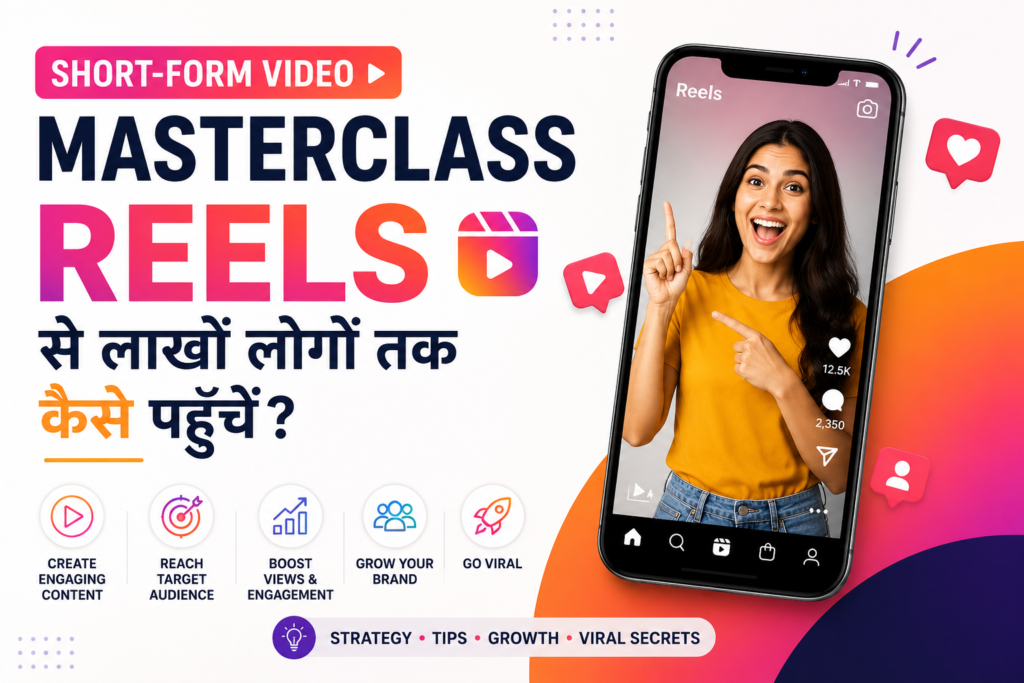
Short-Form Video Masterclass: Reels से लाखों लोगों तक कैसे पहुँचें ?
Short-Form Video Masterclass: Reels से लाखों लोगों तक कैसे पहुँचें ? आज के डिजिटल दौर में लोगों का ध्यान कुछ ही सेकंड के लिए किसी कंटेंट पर रुकता है। ऐसे में Short-Form Videos जैसे Instagram Reels, YouTube Shorts और Facebook Reels सबसे प्रभावी मार्केटिंग टूल बन चुके हैं। सही रणनीति के साथ बनाई गई एक Reel न केवल लाखों लोगों तक पहुँच सकती है, बल्कि नए ग्राहकों, ब्रांड की पहचान और बिक्री बढ़ाने में भी मदद कर सकती है। अगर आप अपने बिज़नेस को सोशल मीडिया पर तेज़ी से आगे बढ़ाना चाहते हैं, तो best digital marketing services in Swargate जैसी प्रोफेशनल डिजिटल मार्केटिंग सेवाओं की सही रणनीति आपके Reels की पहुँच और ब्रांड की ऑनलाइन पहचान को नई ऊँचाइयों तक ले जा सकती है। Short-Form Video क्या है? Short-Form Video वह वीडियो होता है जिसकी लंबाई आमतौर पर 15 से 90 सेकंड के बीच होती है। यह तेज़, आकर्षक और सीधे संदेश देने वाला कंटेंट होता है जिसे लोग आसानी से देखते, शेयर करते और सेव करते हैं। आज Instagram, YouTube और Facebook ऐसे वीडियो को अधिक प्राथमिकता देते हैं क्योंकि दर्शक इन्हें लंबे समय तक देखते हैं और अधिक इंटरैक्ट करते हैं। यही कारण है कि आज कई ब्रांड best instagram marketing company in Swargate की मदद से Reels Marketing Strategy तैयार कर रहे हैं। Reels वायरल क्यों होती हैं? एक सफल Reel केवल अच्छी वीडियो क्वालिटी से नहीं बनती। इसके पीछे कई महत्वपूर्ण कारण होते हैं। पहले 3 सेकंड में दर्शकों का ध्यान आकर्षित करना समस्या और समाधान पर आधारित कंटेंट ट्रेंडिंग ऑडियो का सही उपयोग साफ़ और आकर्षक कैप्शन नियमित पोस्टिंग Audience Retention बढ़ाना अधिक Save और Share प्राप्त करना जब लोग आपकी Reel को अंत तक देखते हैं, सेव करते हैं और दूसरों के साथ शेयर करते हैं, तब Instagram Algorithm आपकी Reel को अधिक लोगों तक दिखाने लगता है। लाखों लोगों तक पहुँचने की 7 प्रभावी रणनीतियाँ 1. पहले 3 सेकंड सबसे महत्वपूर्ण हैं वीडियो की शुरुआत ऐसी होनी चाहिए जो दर्शक को तुरंत रोक दे। उदाहरण “क्या आपकी Reels पर Views नहीं आ रहे?” “इस एक गलती की वजह से आपकी Reel वायरल नहीं होती।” 2. समस्या का समाधान दें लोग मनोरंजन के साथ-साथ सीखना भी चाहते हैं। ऐसी Reels बनाइए जो किसी वास्तविक समस्या का समाधान दें। 3. नियमित कंटेंट पोस्ट करें सप्ताह में कम से कम 3–5 Reels पोस्ट करने की आदत बनाइए। निरंतरता से Algorithm आपके कंटेंट को बेहतर तरीके से पहचानता है। 4. ट्रेंड्स को अपने विषय के अनुसार अपनाएँ हर ट्रेंड आपके बिज़नेस के लिए सही नहीं होता। अपने क्षेत्र से जुड़े ट्रेंड्स का उपयोग करें ताकि सही ऑडियंस तक पहुँच सकें। 5. कैप्शन और हैशटैग का सही उपयोग करें सिर्फ वायरल हैशटैग लगाने के बजाय विषय से संबंधित Keywords और आकर्षक Caption लिखें। 6. वीडियो की क्वालिटी बेहतर रखें अच्छी Lighting साफ़ Audio 9:16 Format Clear Text Professional Editing आज की प्रतिस्पर्धा में केवल वीडियो बनाना काफी नहीं है। सही कंटेंट प्लानिंग और सोशल मीडिया रणनीति के लिए कई व्यवसाय affordable digital marketing agency Swargate जैसी अनुभवी एजेंसियों के साथ काम करना पसंद करते हैं ताकि बेहतर Engagement और Conversion प्राप्त हो सके। 7. Call-To-Action जोड़ें वीडियो के अंत में दर्शकों को Action लेने के लिए प्रेरित करें। इस Reel को Save करें। अपने दोस्तों के साथ Share करें। ऐसे और टिप्स के लिए Follow करें। 2026 में Short-Form Video का भविष्य AI आधारित कंटेंट सुझाव, Personalized Feed और Smart Algorithm के कारण Short-Form Videos आने वाले वर्षों में और अधिक प्रभावशाली होंगे। जो ब्रांड अभी से Video Marketing Strategy अपनाएंगे, वे अपने Competitors से कई कदम आगे रहेंगे। किसे Short-Form Video Marketing अपनानी चाहिए? छोटे और मध्यम व्यवसाय स्टार्टअप डॉक्टर और क्लिनिक फिटनेस ट्रेनर एजुकेशन संस्थान रियल एस्टेट कंपनियाँ रेस्टोरेंट ब्यूटी और फैशन ब्रांड फ्रीलांसर Personal Brands निष्कर्ष Short-Form Videos केवल मनोरंजन का माध्यम नहीं हैं, बल्कि यह आधुनिक डिजिटल मार्केटिंग की सबसे प्रभावी रणनीतियों में से एक हैं। यदि आप लगातार उपयोगी कंटेंट बनाते हैं, सही ऑडियंस को समझते हैं और वीडियो की गुणवत्ता पर ध्यान देते हैं, तो आपकी Reels भी लाखों लोगों तक पहुँच सकती हैं और आपके बिज़नेस की ऑनलाइन ग्रोथ को नई दिशा दे सकती हैं। यदि आप अपने ब्रांड की डिजिटल उपस्थिति को और मजबूत बनाना चाहते हैं, तो सही रणनीति, निरंतर कंटेंट और अनुभवी डिजिटल मार्केटिंग सहयोग आपकी सफलता की गति को कई गुना बढ़ा सकता है।